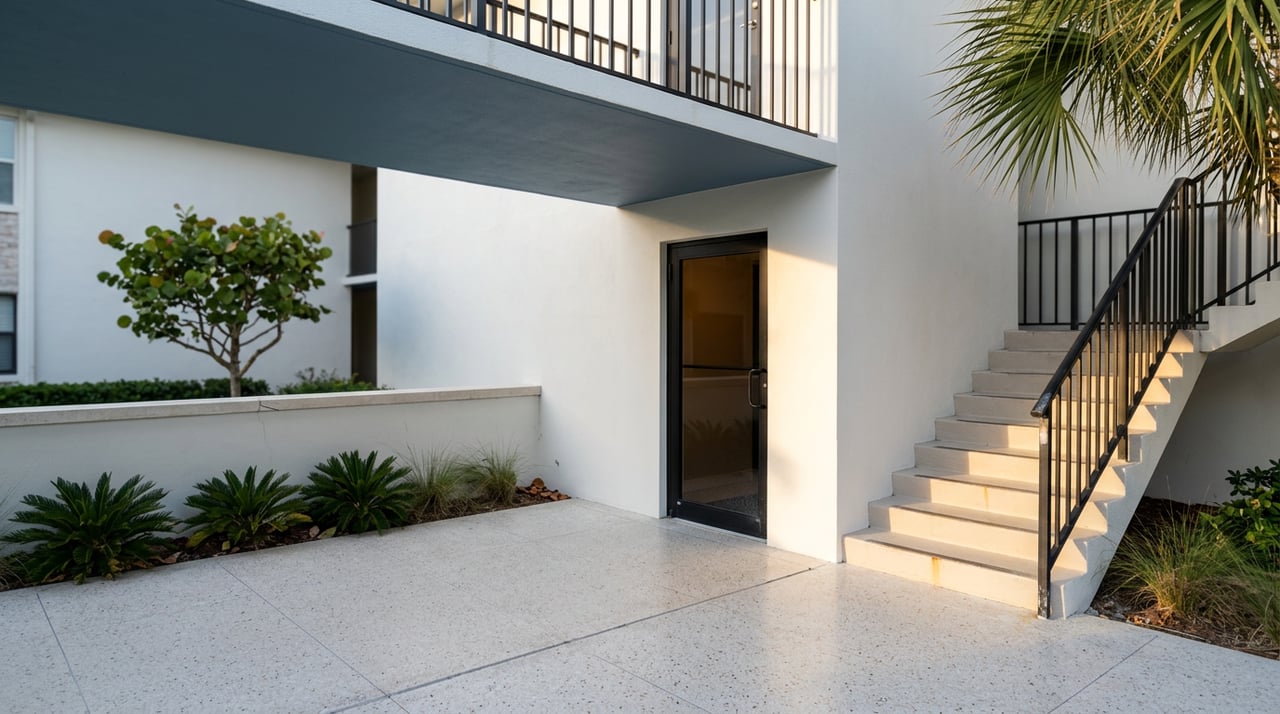
Picture the moment a buyer's agent pulls up two listings side by side. One sits on Venice Island, walking distance to the beach, historic downtown charm, a monthly HOA fee that looks almost quaint. The other sits a few miles east in a newer mainland community, a comparable floor plan, a lower list price, but a separate line item on the tax bill that buyers can review. The buyer assumes the island home is simply the pricier, better version of the same thing. The two homes can carry different ownership costs, so buyers can compare them before making an offer.
The price difference reflects different ownership costs. Mainland CDD assessments are disclosed and scheduled, while some island condo costs may depend on inspection findings and reserve needs.
Two Markets, One Bridge
Venice Island and mainland Venice sit a few hundred yards apart, connected by three bridges: Tamiami Trail, Center Road, and East Venice Avenue. On paper they're the same city. In practice they're two different products built on two different financing models, and the price gap reflects that.
Recent local data puts the island's median home value at roughly $597,500 against roughly $437,000 on the mainland, a premium in the neighborhood of 36 percent. Island conditions currently favor buyers, with many properties spending 90 to 120 days on market and closing 4 to 7 percent below list. For context, that same island premium still runs about 45 percent below Siesta Key's median of roughly $1.1 million, which is part of why relocators comparing barrier islands across Sarasota County treat Venice Island as the value play rather than the reach.
A useful comparison is how the two purchase prices relate to ongoing and potential ownership costs.
Understanding Mainland Ownership Costs
Newer mainland communities, especially the phases inside Wellen Park and North Venice, are financed through Community Development Districts. A CDD is a special taxing district the developer sets up to bond the cost of roads, drainage, and amenities, then repay that bond over 20 to 30 years through a non-ad valorem assessment that shows up on the county property tax bill, separate from the HOA. Annual CDD assessments in the Venice area commonly run $400 to $3,000, averaging around $2,000, and in Wellen Park's newest phases the combined HOA and CDD load can reach $5,000 to $12,000 a year once resort pools, fitness centers, and golf are folded in.
That number is uncomfortable the first time a buyer sees it, but it's also fully disclosed, fully scheduled, and tied to infrastructure that's already been built and inspected as new construction. A handful of Venice-area communities market themselves specifically on skipping this structure. Milano and Cielo advertise no CDD fee alongside relatively low HOA dues. Beachwalk, Vicenza, and Palmero appear on local lists of no-CDD Venice-area neighborhoods, and Venice Woodlands, tucked east of I-75, is frequently cited as an overlooked no-CDD value play close to Myakka River State Park.
| Cost driver | Mainland (Wellen Park, North Venice) | Venice Island |
|---|---|---|
| CDD assessment | Common, $400–$3,000/year, avg. ~$2,000 | Rare on older parcels |
| Typical HOA range | $170–$755/month in Wellen Park | $100/year (no-HOA single family) to $1,000+/month (Gulf-front condo) |
| Infrastructure age | New, reserve-funded from day one | Often 30–50+ years old |
| Biggest disclosed cost | CDD bond, scheduled and public | Inspection and reserve costs vary by building |
Mainland CDD assessments are generally disclosed in advance. For some island condos, future costs may depend on inspection findings and reserve funding.
Condo Inspection and Reserve Costs
Condo inspection and reserve requirements can affect costs beyond the HOA fee. Roughly 480 condominium associations operate within Venice, and a majority were built before 1995. Most sit within three miles of the Gulf, which matters because Florida's post-Surfside building safety law, codified at Florida Statute 553.899, requires a milestone structural inspection at 30 years of age, or 25 years for buildings close to the coast when the local building department elects to apply the earlier timeline.
That means the statute's inspection rules apply to qualifying buildings in the Venice area according to the applicable age and location criteria. Qualifying for a required inspection doesn't mean a building has a problem. It means the building is now legally required to find out, on a state-mandated clock, and to fund whatever the engineer's report says needs fixing.
Sarasota County adopted its own implementing ordinance, requiring associations to file inspection status with the county building division. Sellers now also have to complete the CR-7 Condominium Rider under the current Florida Realtors and Florida Bar contract, in effect since July 1, 2025, which forces disclosure of any milestone inspection report, turnover inspection, or Structural Integrity Reserve Study, and gives the buyer seven business days to review and cancel without penalty. Florida's Division of Condominiums, Timeshares, and Mobile Homes says the waiver that once let associations skip fully funding structural reserves expired for good on budgets adopted after December 31, 2024.
Put those deadlines on a calendar and you can see why this is landing now rather than later. The grace periods have run out. Statewide reporting on the fallout describes special assessments ranging from $10,000 to more than $100,000 per unit in older coastal buildings where salt-air corrosion had gone unaddressed for years, precisely the profile of a pre-1995 Gulf-facing mid-rise. One piece of relief: SavingAdvice reports that, starting January 1, 2026, House Bill 1021 requires associations with 25 or more units to post governing documents, budgets, and reserve studies to a website, so a buyer researching a specific building can often pull the SIRS and milestone report before ever picking up the phone.
Mainland CDD assessments can be reviewed in advance. For a condo that has not completed its inspection cycle, future costs may depend on inspection findings and reserve needs.
What to Request Before You Write the Offer
None of this means Venice Island is a bad buy. It means the due diligence looks different depending on which side of the bridge you're on. Before writing an offer on a Venice-area condo three stories or taller, ask the listing agent or association directly for:
- The completed milestone inspection report, Phase 1 and Phase 2 if applicable, and the date the certificate of occupancy was issued
- The current Structural Integrity Reserve Study and whether the reserve schedule is fully funded or still ramping up
- The most recent association budget and whether it was adopted before or after December 31, 2024, which determines whether reserves could still have been waived
- Written confirmation of any pending or already-approved special assessment, not just what's listed in the HOA fee
- The signed CR-7 disclosure, and confirmation of your seven-business-day review window
On the mainland, the equivalent list is shorter but just as easy to skip: pull the actual CDD assessment for the specific parcel, not a community average, since bond series and lot size both change the number, and confirm whether the debt service portion is still outstanding or has been retired.
Comparing the Two Cost Profiles
The choice is not simply island versus mainland; it depends on how a buyer weighs different ownership costs. A CDD assessment is disclosed and scheduled, while costs for a pre-1995 building that has not completed its milestone inspection cycle may depend on inspection findings and board decisions. Neither option is automatically the wrong choice. A buyer considering new construction can factor in CDD assessments and amenities, while a buyer considering Venice Island can review the specific building's paperwork and reserves.
The price gap alone does not determine which market is the better fit; buyers can compare each property's price with its applicable ownership costs.
A Few Questions Worth Asking Directly
Does every Venice Island condo face a milestone inspection? Only buildings that are three or more habitable stories and have reached the statutory age trigger face a milestone inspection. Many single-family homes and low-rise buildings under three stories fall outside the requirement entirely, though lenders may still ask for standard structural documentation.
If a building already passed its milestone inspection, is the risk gone? A clean Phase 1 report means no substantial structural deterioration was found at that inspection. It doesn't eliminate future reserve funding requirements or guarantee the next 10-year re-inspection will be as straightforward, so ask for the reserve study alongside the inspection report, not instead of it.
Are CDD fees ever removed once the bond is paid off? The bond portion of a CDD assessment typically ends once the debt is retired, often 20 to 30 years after the district was formed, but the operations and maintenance portion continues for as long as the district exists. A listing advertising a "paid-off CDD bond" still carries an ongoing, usually smaller, O&M charge.
Whichever side of the bridge fits your plan, the paperwork is the part that actually protects you. If you want help pulling the real numbers on a specific building or a specific parcel before you write an offer, the team at Megan Finke Group is glad to walk through it with you.
This article is general information, not legal, tax or financial advice. Consult a qualified professional about your situation.
