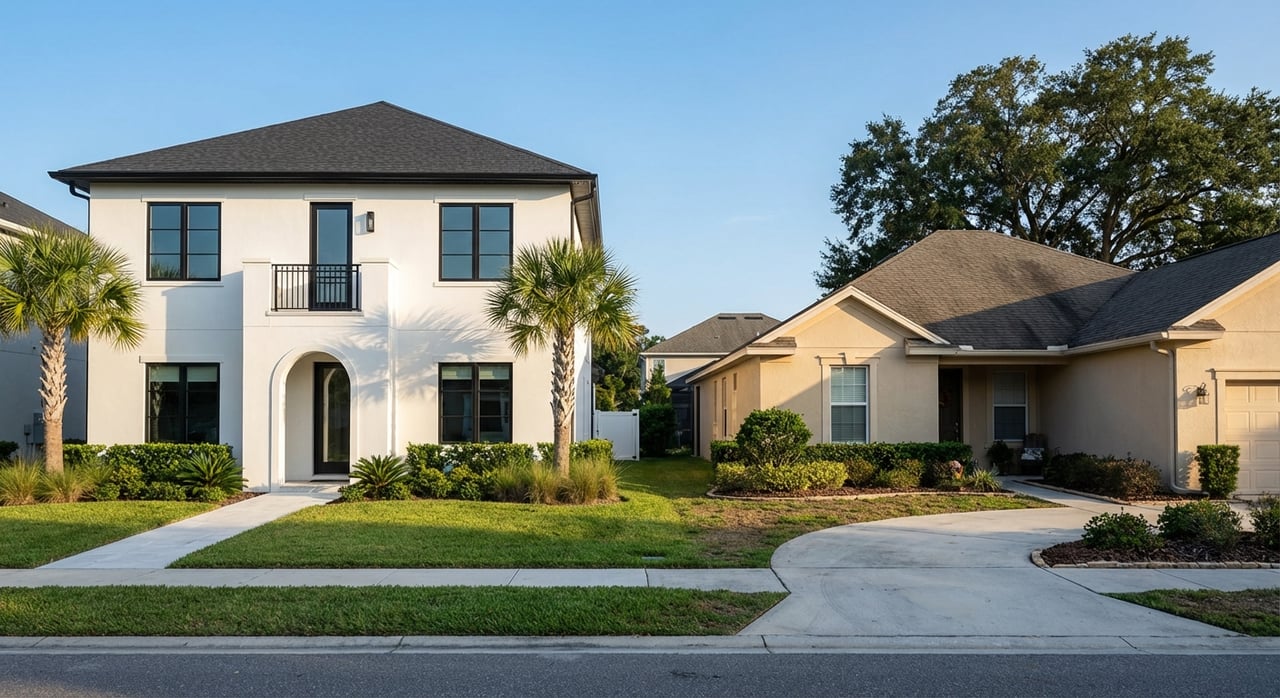
New build freshness or established charm? If you are buying in Parrish, you are likely weighing those two paths. It is a real choice, because new master-planned communities are shaping inventory, pricing, and monthly costs across 34219. In this guide, you will learn how new construction and resale compare on price, timelines, warranties, lots, and ongoing fees in Parrish, plus a simple framework to choose what fits your life. Let’s dive in.
Parrish market snapshot
Parrish sits in a sweet spot for value in Manatee County. The typical Parrish home value was about $416,600 as of Jan 31, 2026, per Zillow. Redfin reported a median sale price near $399,000 for ZIP 34219 in Jan 2026. Realtor.com’s city overview showed a median listing price in the low $400Ks in Oct 2025. Numbers vary by portal and month, so use these as context and verify for your target neighborhood and floor plan.
Parrish’s rapid growth brings a lot of new homes. Local reporting shows much of the recent construction in Manatee County sits inside community development districts, or CDDs, which affects how you pay for amenities and infrastructure long term. You can learn more about how developer debt and special districts work in the Suncoast region from this investigative reporting on CDDs.
Price and value: new vs resale
Here is the practical reality in Parrish:
- New construction prices are set by builders with a base price, plus lot premiums and design upgrades. Incentives like closing credits or rate buydowns can reduce your effective cost. Spec or quick-move homes can price close to comparable resales because finishes are standardized and incentives are baked in.
- Resales can deliver value in mature landscaping, backyard privacy, or a larger lot. Custom upgrades already in place can be worth paying for if they match your wish list.
How to compare apples to apples:
- Ask for a complete price sheet for the new home: base price, lot premium, structural options, design upgrades, and estimated closing costs. Then net out any incentives.
- For resales, compare the final monthly cost, not just the purchase price. Look at HOA dues, whether a CDD applies, age of roof/HVAC, and likely insurance costs.
Tip: Builders like Neal Communities outline neighborhood features and school context on community pages such as Canoe Creek. Use those pages to understand the amenity package and what is included at each price point.
Timelines and move-in speed
Time often decides the winner:
- New construction
- Quick-move/spec: If a home is already underway, you can often close in 30 to 60 days once it is ready and you are under contract.
- Build-to-order: Plan on roughly 6 to 12 months, depending on permits, weather, materials, and your option choices.
- Resale
- A financed resale typically closes in about 30 to 60 days after contract, following inspections, appraisal, and underwriting.
If you need to move soon, filter for quick-delivery new homes and get a firm estimate for the Certificate of Occupancy. If you have time and want control over finishes, building can be worth the wait.
Warranties and risk
- New construction typically includes a “1-2-10” builder warranty: 1 year on workmanship, 2 years on major systems, and 10 years on structural coverage. Many programs are insurance-backed; review the fine print for exclusions and claim steps. See a neutral overview of the 1-2-10 builder warranty structure.
- Resales do not come with a builder structural warranty. You can negotiate a one-year home warranty service plan at closing to cover certain systems and appliances. Coverage varies, and who pays is negotiable; here is a clear explainer on how home warranty costs are handled at closing.
Either way, plan independent inspections. For new builds, consider pre-drywall, final, and an 11‑month check before the workmanship warranty expires. For resales, order a full home inspection and, when appropriate, a wind-mitigation report to support insurance shopping.
Lots and outdoor living
Newer Parrish villages often use lot widths around 40 to 60 feet, which translates to approximately 0.10 to 0.16 acres. Some resales and earlier phases offer larger lots around 0.15 to 0.25 acres or more. Lot size and shape affect pool feasibility, outdoor rooms, and privacy. Always verify your target lot with a plat and survey.
Here is a quick comparison you can use while touring:
| Option | Typical Parrish lot size | Pool feasibility | Privacy expectations | Notes |
|---|---|---|---|---|
| New construction (many master plans) | ~0.10–0.16 acres (about 6,000–7,400 sq ft) | Often feasible with proper setbacks; check easements and utility lines | New landscaping; privacy grows in over time | Confirm fence and pool rules in CC&Rs before contracting |
| Resale (varies by neighborhood/phase) | ~0.15–0.25+ acres; some larger parcels exist | Often feasible, and some homes already include pools | Mature trees and hedges can improve privacy | Verify prior permits, screen enclosure condition, and any drainage easements |
HOA, CDD, and monthly costs
In Parrish, you will likely see two recurring charges beyond your mortgage:
- HOA dues: Fund private amenities and common-area maintenance. Request the HOA budget, CC&Rs, and reserve details so you know what is included.
- CDD assessments: Public, non-ad valorem assessments that repay developer bonds and fund district operations. These are common in Parrish’s newer master-planned communities and may appear on your Manatee County tax bill or be billed directly. You can review how districts finance and report on sites like the Forest Creek CDD finances page.
What to expect: Investigative reporting across Manatee County found many homeowners in special districts paid roughly $1,000 to $3,000 per year, with some lots higher or lower depending on the phase and bond schedule. The Suncoast Searchlight series explains how these assessments work and why they vary by lot. Read the analysis of homeowner CDD costs here: developers build, homeowners pay the debt.
Budget tip: Convert the annual CDD to a monthly estimate. Example: $2,400 per year is about $200 per month. Lenders typically include CDD assessments in your escrow and qualification, just like taxes. Ask your lender to model PITI + HOA + CDD so you can compare homes by total monthly cost.
Taxes, flood, and insurance
- Property taxes: Manatee County values property as of Jan 1 each year. If your new construction finishes after Jan 1, a supplemental bill can capture the added value mid-year. Confirm assessed values and exemptions with the Manatee County Property Appraiser.
- Flood and elevation: Parts of Parrish include rivers and wetlands. Check FEMA’s Flood Map Service Center for your specific address and request the finished-floor elevation or an elevation certificate from the builder. Elevation and flood zone will influence your flood insurance premium and pool or landscaping plans.
- Insurance: Roof age, wind protections, and location relative to water affect premiums. A wind-mitigation inspection can help qualify for discounts on many policies.
Commutes and schools overview
Parrish places you between Sarasota/Bradenton to the south and St. Pete/Tampa to the north. Drive time varies by day and destination, but as a benchmark, the Parrish-to-Tampa drive distance is about 41 miles and roughly 38 minutes off-peak according to Travelmath’s distance estimate. Always test your route during your target commute hours.
Many Parrish neighborhoods are served by Manatee County public schools. Builders sometimes list the current assigned schools for a community on their websites. For example, Neal Communities’ Canoe Creek page shows typical school assignments for that neighborhood. Always confirm the final assignment with the school district for your specific address.
How to choose: a simple framework
Use this practical scoring guide to decide. Give each item a score from 1 to 5, where 1 means “not important” and 5 means “must have.”
Step 1: Define your timeline
- Need keys in 30–60 days: favor resale or a quick-move new home already underway.
- Flexible 6–12 months: building new becomes realistic and opens more floor plans and lots.
Step 2: Total monthly budget
- List your target PITI (principal, interest, taxes, insurance) and then add HOA and CDD. If a CDD is $2,400 per year, add about $200 per month to your budget.
- Compare homes by monthly cost, not just purchase price.
Step 3: Lot and lifestyle priorities
- Privacy, larger yard, or established trees: lean resale or earlier-phase neighborhoods.
- Club-style amenities with new facilities: many newer master plans deliver these, often with a CDD. Verify what is built now versus planned.
Step 4: Customize or convenience
- Want to choose finishes and structural options: build new.
- Prefer move-in-ready with upgrades already installed: target resales that match your style.
Step 5: Resale outlook
- Consider neighborhood demand, amenity set, lot uniqueness, and nearby development. Think about your likely hold period and who your future buyer will be.
Quick checklist before you sign
Save this checklist and request these documents from the builder or listing agent:
- CDD details: current assessment roll, adopted budget, and bond/payoff schedule. Ask whether the CDD appears on the tax bill or is billed directly.
- HOA documents: budget, CC&Rs, reserves, dues, and any special assessments. Clarify if the developer still controls the HOA.
- Warranties: the 1-2-10 builder warranty coverage and claims process, and whether it is insurance-backed and transferable.
- Property and lot documents: plat, survey, finished-floor elevation or elevation certificate, and recorded easements. Confirm pool/fence rules and setbacks.
- New-build readiness: permit log, inspection sign-offs, and the expected date for Certificate of Occupancy.
- Comparable sales and monthly cost: recent comps in the same community and a sample budget showing PITI + HOA + CDD + estimated insurance.
- Inspections: schedule pre-drywall and final for new builds, and a full inspection for resales. Consider an 11‑month inspection before the workmanship warranty expires.
Decision flow example
- Cost tolerance: If total monthly cost with HOA/CDD must stay under a set number, compare specific homes on an equal PITI + HOA + CDD basis.
- Timeline: If you need 45 days, look at resale or builder quick-move options only.
- Lot priority: If you want a larger backyard and privacy, hunt resales or earlier phases with bigger lots.
- Amenities and finishes: If a brand-new clubhouse and current interior design are top priorities, focus on new communities that deliver those today.
When you are ready to tour, we can line up both options side by side so you can feel the tradeoffs in person. If you prefer to shop remotely, our team can handle virtual tours, design-center meetings, and inspections on your behalf.
Ready to compare homes that fit your exact timeline, monthly budget, and lifestyle? Connect with the Megan Finke Group for a concierge, step-by-step plan.
FAQs
What is a CDD fee in Parrish and how does it affect my payment?
- A CDD is a public assessment that funds community infrastructure and amenities. It is often $1,000 to $3,000 per year in Parrish and is usually escrowed with your taxes, so include it in your monthly budget.
How long does new construction take in Parrish?
- Quick-move homes can close in about 30–60 days once ready. Build-to-order homes commonly take 6–12 months, depending on permitting, weather, and materials.
Do new homes come with warranties?
- Yes. Many builders provide a 1-2-10 warranty structure that covers workmanship, major systems, and structural elements for set periods. Read the coverage and claim rules before you sign.
Can I add a pool to a new-construction lot?
- Often yes, but it depends on setbacks, easements, and utilities. Confirm rules in the CC&Rs, review the plat and survey, and verify pool feasibility with the builder before contract.
How do Parrish commutes compare with Sarasota or Tampa?
- Parrish offers access both south and north. The Parrish-to-Tampa drive is about 41 miles and roughly 38 minutes off-peak; times vary, so test your route during your normal commute hours.
