Thinking about a new home in Parrish but not sure how these large, master‑planned communities actually work? You are not alone. Between HOAs, CDDs, villages, and phased amenities, there is a lot to digest before you sign a contract. This guide breaks down how Parrish communities are organized, what fees to expect, lifestyle trade‑offs, and the key documents to review. Let’s dive in.
Why Parrish is growing
Parrish sits in Manatee County, east of I‑75, in a fast‑growing corridor that connects the Tampa Bay and Sarasota‑Bradenton region. Many buyers choose Parrish for newer homes and more land at prices that can be lower than closer‑in neighborhoods. The trade‑off is a commute that depends on distance and time of day.
Large developments go through Manatee County planning and approvals. That process typically covers rezoning, traffic impacts, stormwater and environmental protections, and utilities. You can confirm details through Manatee County Planning and Zoning and the county’s comprehensive plan resources.
How communities are organized
Governance: HOA vs. CDD
Most master‑planned communities here use a Homeowners Association (HOA) to enforce covenants, set community rules, manage amenities, and handle day‑to‑day operations. Florida’s HOA rules live in Chapter 720 of the Florida Statutes. HOA dues vary by amenity package and scale.
Many also layer in a Community Development District (CDD). A CDD is a special local government unit used to finance and maintain big infrastructure like roads, utilities, drainage, and sometimes amenity facilities. CDDs issue bonds and charge annual assessments to repay them. These assessments often appear as a separate line on your property tax bill. The mechanics of CDDs are in Chapter 190 of the Florida Statutes.
Early on, the developer usually controls the HOA and often the CDD board. Homeowners gain control later, based on documents and statutory thresholds. This timing affects decisions on budgets, rules, and amenity completion in the first years.
Physical layout: villages and phases
Parrish master plans are often broken into multiple villages or neighborhoods. Each village may feature different home types and lot sizes, and sometimes its own small amenity or sub‑association. A larger clubhouse or amenity center typically serves the full community.
Builders deliver projects in phases. Roads and utilities come first, followed by model homes and early neighborhoods. Large amenities may arrive in later phases. The recorded master documents usually outline timing and any escrow or completion guarantees.
Who handles what
A master HOA often manages big shared assets, while sub‑HOAs may oversee village‑level landscaping or private streets. The CDD may own and maintain specific infrastructure, such as stormwater systems or lift stations, before any turnover to the county. Ownership maps and recorded documents spell out these responsibilities.
Amenities and design
What you can expect
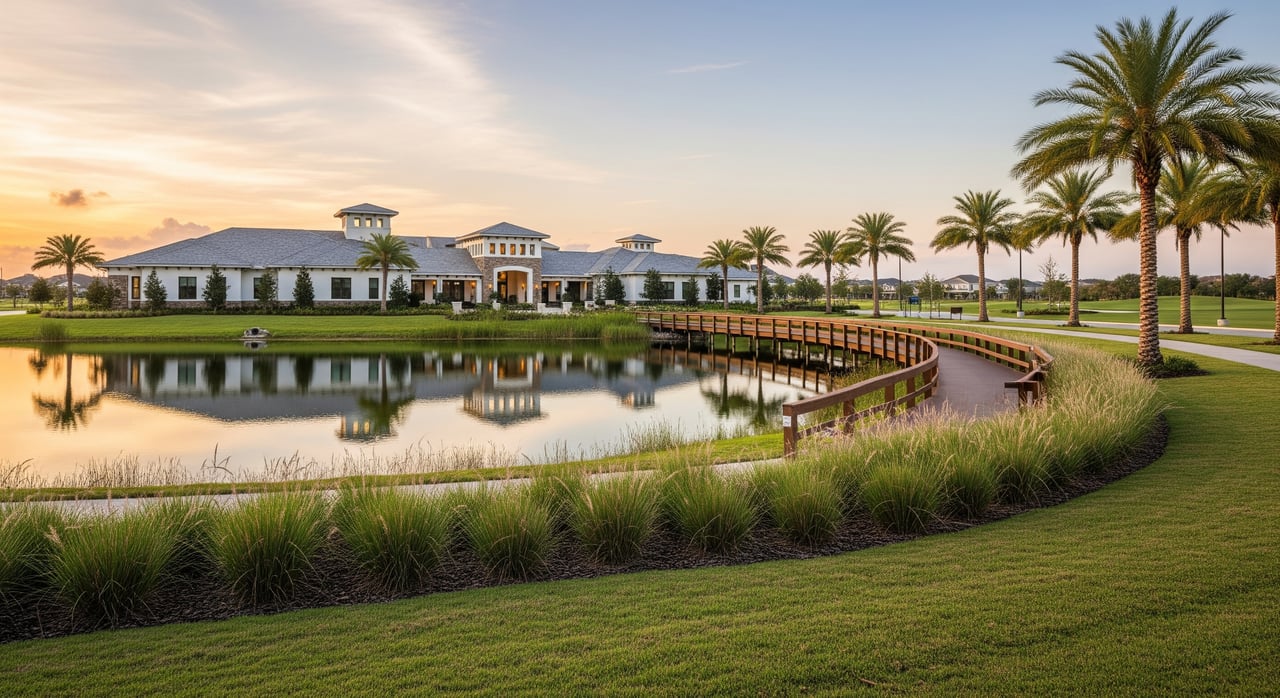
Common amenities include a central clubhouse with resort‑style pool, fitness center, and event spaces. Many communities add trail systems, playgrounds, dog parks, and sports courts like pickleball or tennis. Some plans include gated entries or on‑site lifestyle programming. Golf is less common inland than along the coast, but you may find golf‑adjacent neighborhoods in certain Florida master plans.
Design and environmental features
Expect native landscaping, preserved wetlands with buffers, and stormwater ponds that also act as lakescapes. Newer street designs often promote slower speeds with sidewalks and bike lanes. Architectural guidelines protect neighborhood character, which can affect exterior paint colors, fences, and landscaping.
Utilities and infrastructure
Large projects typically use county water and sewer where available, or a private utility provider. Some communities offer reclaimed water for irrigation. Developers build internal roads, and traffic studies may require off‑site improvements like turn lanes or signals as part of approvals.
The money side: fees, taxes, insurance
HOA dues and CDD assessments
HOA dues cover daily operations, amenities, common‑area maintenance, and management. CDD assessments are separate and tied to infrastructure bonds. You should review the CDD engineer’s report and assessment roll to understand amounts and terms.
Special assessments and reserves
Both HOAs and CDDs can levy special assessments for capital repairs or unexpected costs. Before you buy, request recent budgets, financial statements, and any reserve studies. Reviewing board meeting minutes from the past 12 to 24 months can reveal potential projects or disputes.
Title, taxes, and insurance
New construction assessments and CDD charges flow into your annual property tax bill. For insurance, Parrish’s inland location reduces some coastal wind exposure, but flood risk can still exist. Use FEMA flood maps and, if needed, a lot‑specific elevation certificate to understand whether flood insurance is required. Lenders may request HOA or CDD estoppel or disclosure letters before closing.
Rules and restrictions to know
Architectural review and exterior changes
Most master‑planned communities require Architectural Review Committee approval for changes like pools, fences, new paint, or major landscaping. Ask about the process and timelines for approvals before planning upgrades.
Rental policies
Rental rules vary. Some HOAs limit short‑term rentals or set minimum lease terms. If you plan to rent, confirm whether there are caps, registration requirements, or waiting periods.
Maintenance responsibilities
Documents clarify who maintains irrigation, street trees, private roads, and fencing. Read these sections closely so you know your ongoing responsibilities.
Lifestyle trade‑offs in Parrish
- Amenities and programming vs. higher recurring costs. You get on‑site recreation and social events, but you also pay HOA dues and often a separate CDD assessment.
- Newer homes and modern standards vs. active construction nearby. Build quality and energy features are advantages, while staged buildout can mean noise and traffic in early years.
- More space and value east of I‑75 vs. longer commutes. Many buyers accept additional drive time for newer product and larger lots.
- Inland risk profile vs. Florida‑wide storm concerns. Being inland can ease some coastal wind impacts, but flooding and hurricane risk remain statewide considerations.
Smart buyer checklist
- Get all HOA and CC&R documents, rules, bylaws, budgets, reserve studies, and recent financials.
- Confirm whether a CDD exists, review the engineer’s report and assessment schedule, and understand how long bonds run.
- Request the amenity completion timeline and any escrow or guarantee from the developer.
- Verify school assignments directly with the Manatee County School District and ask about capacity or rezoning processes.
- Confirm utility providers for water, sewer, and reclaimed irrigation, plus any connection or impact fees.
- Review architectural guidelines for fences, pools, exterior changes, and solar.
- Check FEMA flood maps and obtain a lot elevation certificate if near a flood zone.
- Get insurance quotes, including flood if applicable, before finalizing your purchase.
- If you plan to rent, review minimum lease terms, caps, and registration rules.
- Visit the community at different times to gauge construction activity, traffic, and amenity use.
How the Megan Finke Group helps
Buying into a master‑planned community involves layers of documents, timelines, and moving parts. You deserve a guide who knows the process and the local landscape. Our team specializes in new construction, remote‑buyer workflows, and planned‑community purchases across Sarasota, Bradenton, Lakewood Ranch, and Parrish.
We help you source and review the right documents, coordinate virtual tours and inspections, confirm fee structures, and align build timelines with your move. For 55+ and active‑adult buyers, we focus on low‑maintenance options and amenities that match your lifestyle. For relocators, we streamline communication and manage details from offer to close so you can move with confidence.
Ready to evaluate specific Parrish communities, floor plans, and fee structures with a local expert by your side? Connect with the Megan Finke Group to plan your next steps.
FAQs
What is a CDD in a Parrish master‑planned community?
- A CDD is a special local district that finances and maintains infrastructure like roads, stormwater, and utilities, funded by assessments often shown on your tax bill.
How do HOA and CDD fees show up on my taxes?
- HOA dues are typically billed directly by the association, while CDD assessments often appear as a separate line item on the Manatee County property tax bill.
When are amenities completed in new Parrish communities?
- Amenities are commonly phased; request the developer’s timeline and check recorded documents for any completion guarantees or escrow.
Can I add a pool or change my exterior in an HOA community?
- Most communities require Architectural Review Committee approval; submit plans and wait for written approval before starting any work.
Are short‑term rentals allowed in Parrish master‑planned communities?
- Policies differ by HOA; some ban or limit short‑term rentals, so confirm minimum lease terms and any caps before you buy.
Do I need flood insurance in Parrish if I am inland?
- It depends on your specific lot and flood zone; check FEMA maps and consider an elevation certificate to determine requirements and cost.
How long does the developer control the HOA or CDD?
- Developer control ends when legal thresholds or document terms are met; review governing documents for the transition timeline and process.
